What Are Hydraulic Agricultural Mulchers and Why Choose Them?
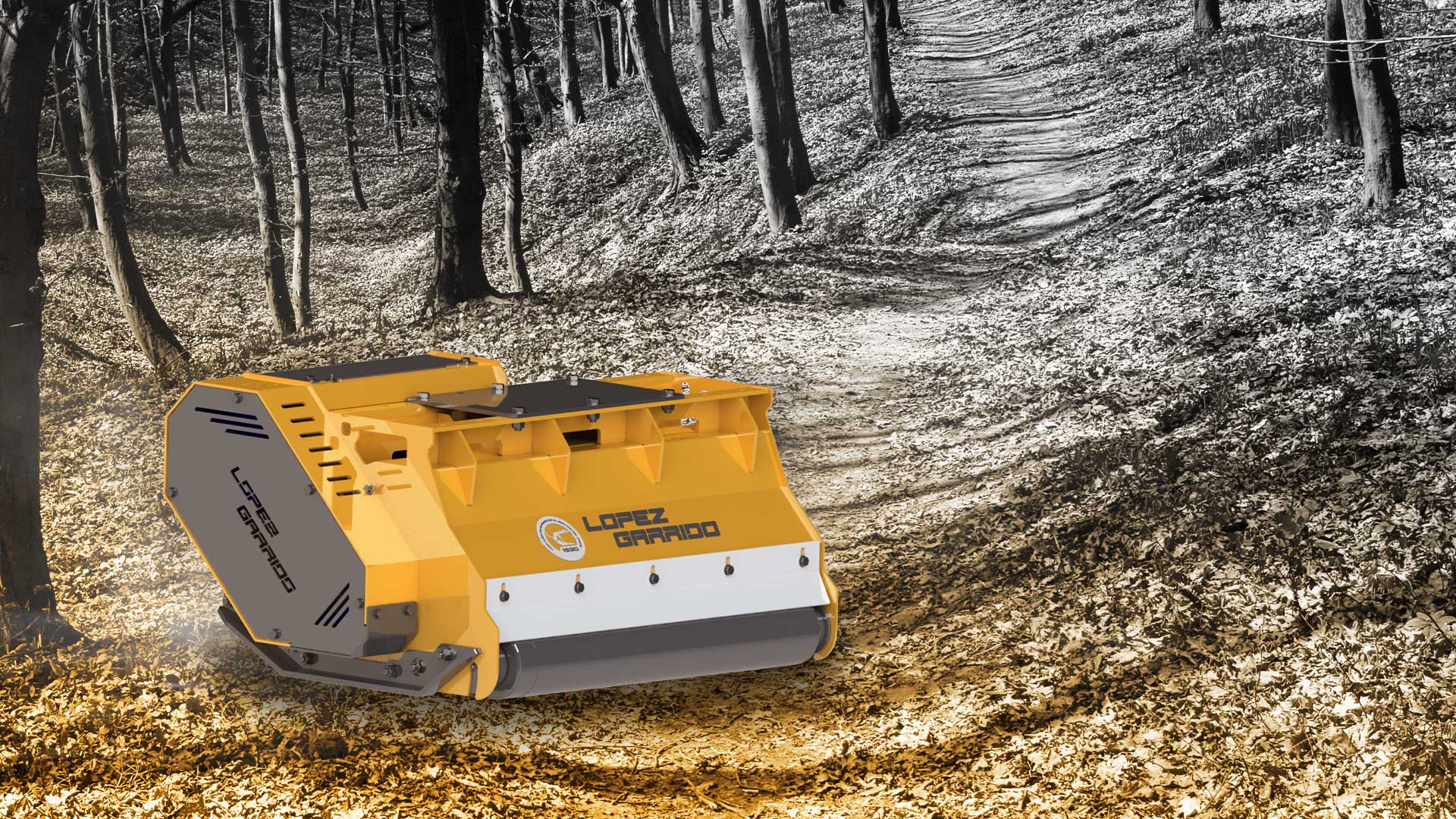
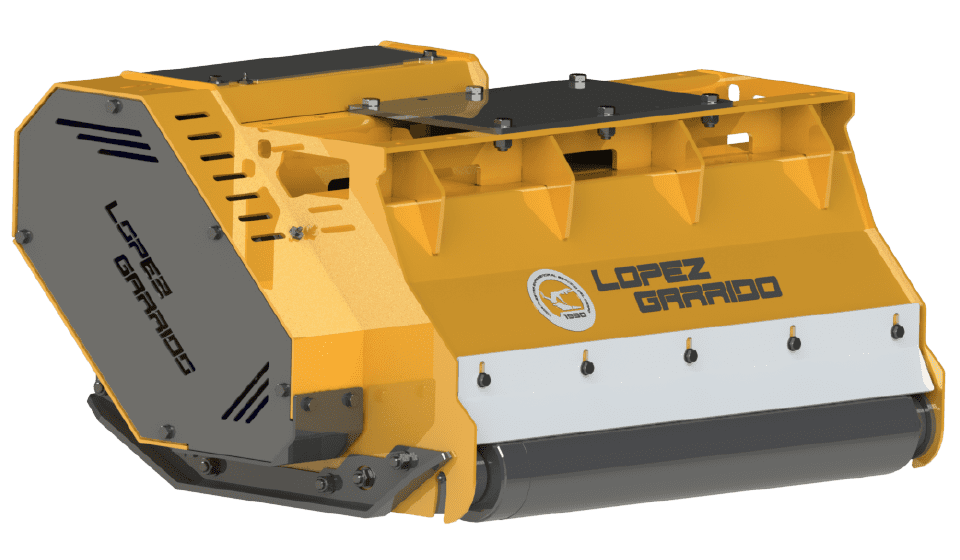
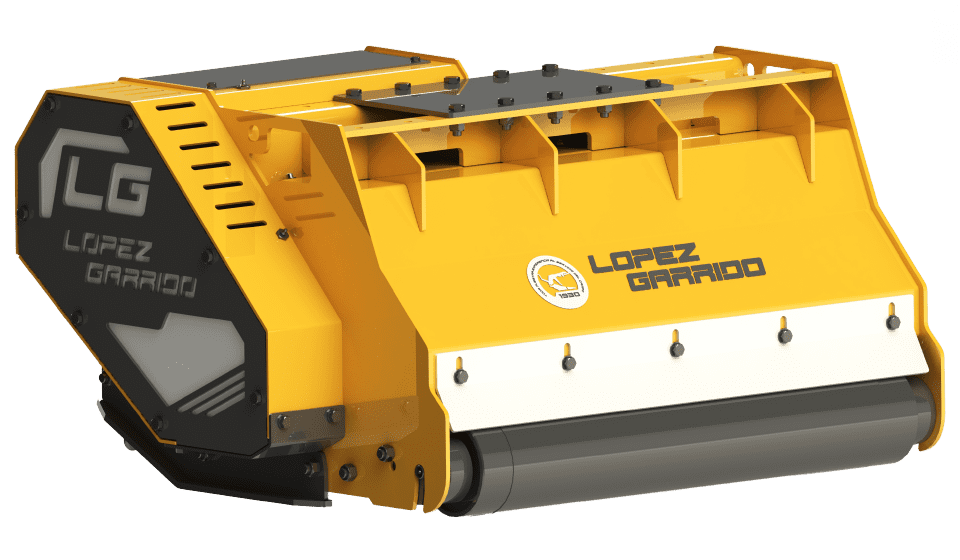
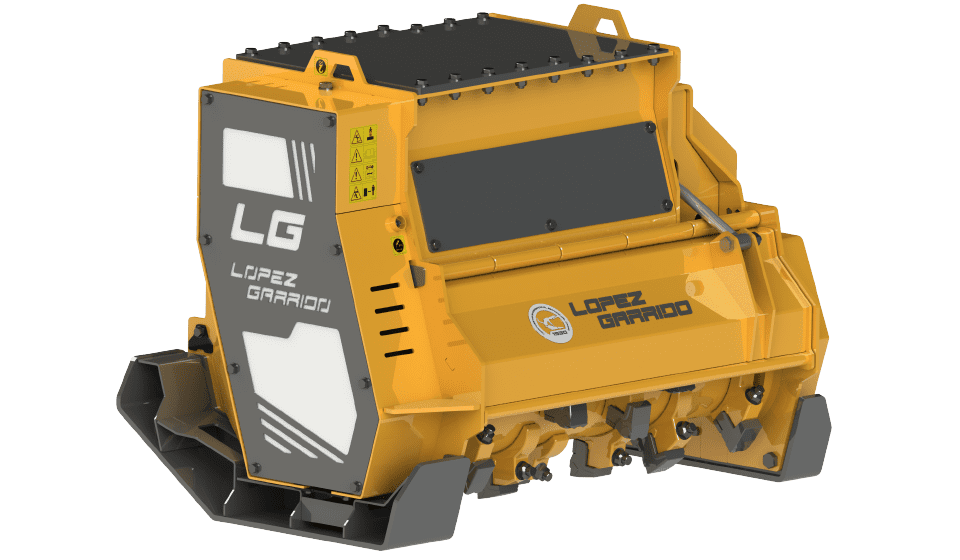
López Garrido Hydraulic Agricultural Mulchers are implements designed to be used with tractors or heavy machinery, providing efficient mulching of vegetation residues, pruning waste, grass, vine shoots, and other organic materials generated in medium- and heavy-duty agricultural operations. Their hydraulic offset system allows precise positioning on the terrain, providing a wider working range and improved adaptability to uneven ground.
In addition to their robust construction, these mulchers feature large-diameter rotors, powerful hydraulic motors, and reinforced transmissions to ensure continuous operation even during extended working hours, while reducing tractor wear and fuel consumption. The combination of high-strength materials and modular design makes them a versatile solution for professional agricultural operations and agricultural service providers.
Specific Advantages of Hydraulic Agricultural Mulchers
One of the main advantages of hydraulic mulchers is their ability to process materials of different sizes and hardness without requiring complex mechanical adjustments. The hydraulic lateral and vertical offset system allows the machine to be quickly adapted to the required working width and terrain angle.
These machines also provide greater operational efficiency compared to traditional models, thanks to oversized transmissions and reinforced rotors that maximize power transfer. Their design simplifies maintenance and allows compatibility with tractors of different power ratings, optimizing performance with every pass.
Comparison of Hydraulic Agricultural Mulcher Models
Below is a comparison table showing the key technical specifications of the main hydraulic models offered by López Garrido. This comparison will help you identify the most suitable option for your agricultural needs based on required power, hydraulic flow rate, operating pressure, and other essential parameters.
Model |
Working Width (mm) |
Rotor Ø (mm) |
Hydraulic Motor |
Pressure (bar) |
Flow Rate (L/min) |
Recommended Use |
TKA |
700–1000 |
380 |
8 cc (fixed) |
150–210 |
20–60 |
Light agricultural work and pruning residues |
TKR |
1000 |
380 |
36 cc |
Up to 200 |
80 |
Vegetation residues and grass |
TKF |
— |
— |
— |
— |
— |
Variable model (depending on configuration) |
TKB |
1000–1500 |
450 |
65 cc (piston motor) |
220–350 |
100–170 |
Forestry and heavy-duty applications |
The collected data shows how each Hydraulic Agricultural Mulcher model offers specific technical characteristics that determine its suitability for different applications. For example, the TKA is an excellent choice for pruning residues and light vegetation, while the TKB is designed for more demanding tasks involving larger-diameter materials.
By analyzing the relationship between working width, hydraulic power, and rotor capacity, you can choose the mulcher that maximizes your tractor’s performance and best suits the type of residues you handle most frequently. This also makes it easier to plan the total operating and maintenance costs of your agricultural operation.
How to Maximize the Performance of Your Hydraulic Mulcher
To ensure your hydraulic agricultural mulcher operates at its full potential, it is important to correctly adjust the hydraulic pressure and flow rate according to the model specifications and tractor power. Proper hydraulic system configuration ensures consistent operation and reduces mechanical stress on components.
It is also recommended to regularly inspect the condition of the hammers, rotor alignment, and adjustment of the support wheels or skids. Proactive maintenance not only extends the machine’s service life but also maintains consistent efficiency throughout your field operations.
Frequently Asked Questions About Hydraulic Agricultural Mulchers
To help you make the best decision about which hydraulic agricultural mulcher is most suitable for your needs, we answer some of the most common questions asked by agricultural professionals.
What Is the Minimum Tractor Power Required to Operate a Hydraulic Agricultural Mulcher?
The required power depends on the model and working width. In general, lighter hydraulic agricultural mulchers can operate with tractors rated between 40 and 60 HP, while more robust models, such as those designed for forestry or intensive applications, require more than 100 HP. It is always recommended to consult the manufacturer’s technical specifications to ensure proper compatibility.
What Are the Advantages of Hydraulic Offset Compared to Mechanical Adjustment?
The hydraulic system allows quick and precise adjustment of the working position without stopping the tractor or making manual adjustments. This results in greater field efficiency, better adaptability to slopes and field margins, and reduced downtime during working hours. Hydraulic agricultural mulchers with lateral and vertical offset capabilities are ideal for operations involving uneven terrain.
What Type of Maintenance Do Hydraulic Agricultural Mulchers Require?
Basic maintenance includes regular inspection of the hydraulic system, bearing lubrication, rotor inspection, and checking the condition of hammers or blades. It is also essential to verify operating pressure and inspect hydraulic hoses. Proper lubrication and cleaning after each use extend the machine’s service life and help prevent breakdowns during critical agricultural periods.